
Middle Part vs Side Part: Which Would You Choose?
Middle Part vs Side Part: Which Would You Choose?
Sometimes, a different part is enough to give familiar hair a fresh look. A middle part creates an even frame on either side of the face, while a side part shifts the balance and adds a more directional shape.
This visual comparison shows both options on the same woman with chestnut brown hair, soft waves, and a black silk blouse. With a similar pose and studio setting, it’s easier to focus on how the parting changes the hairstyle.
1. Chestnut Middle Part: Soft, Balanced Framing
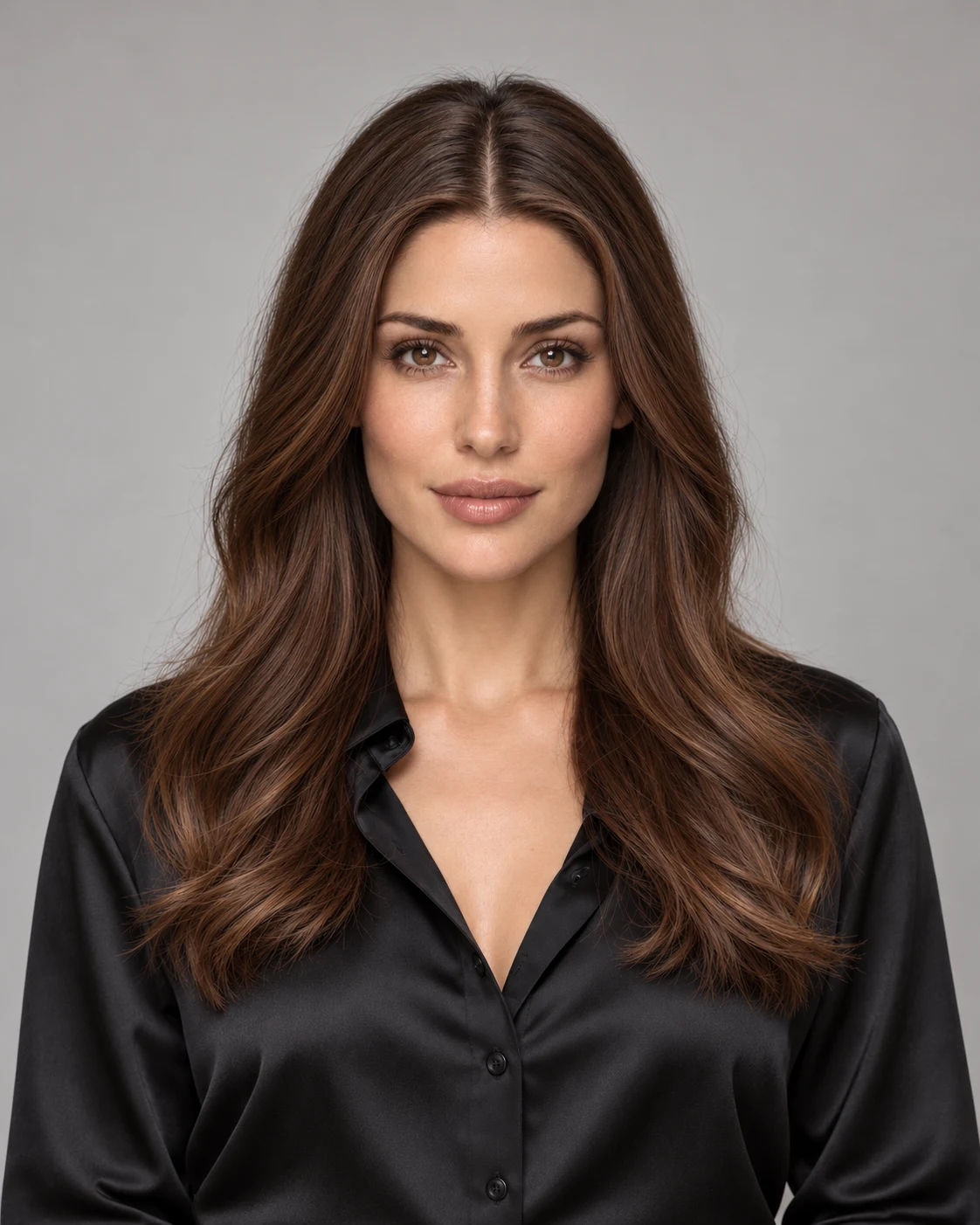
A middle part divides the hair near the center of the forehead, allowing the lengths to fall on both sides of the face.
In this look, chestnut brown hair flows into soft waves through the lower lengths. The open forehead and balanced placement give the hairstyle a polished, understated finish without needing bangs.
Notice how the roots sit relatively close to the head, while the movement builds toward the ends. This keeps the overall shape gentle rather than overly styled.
Try this look if: You enjoy an even frame around your face and a clearly defined center part.
Styling tip: Create the part while your roots are damp, then dry each side in its intended direction. Keep a little softness at the roots rather than pressing them completely flat.
2. Chestnut Side Part: Natural Lift and Asymmetry
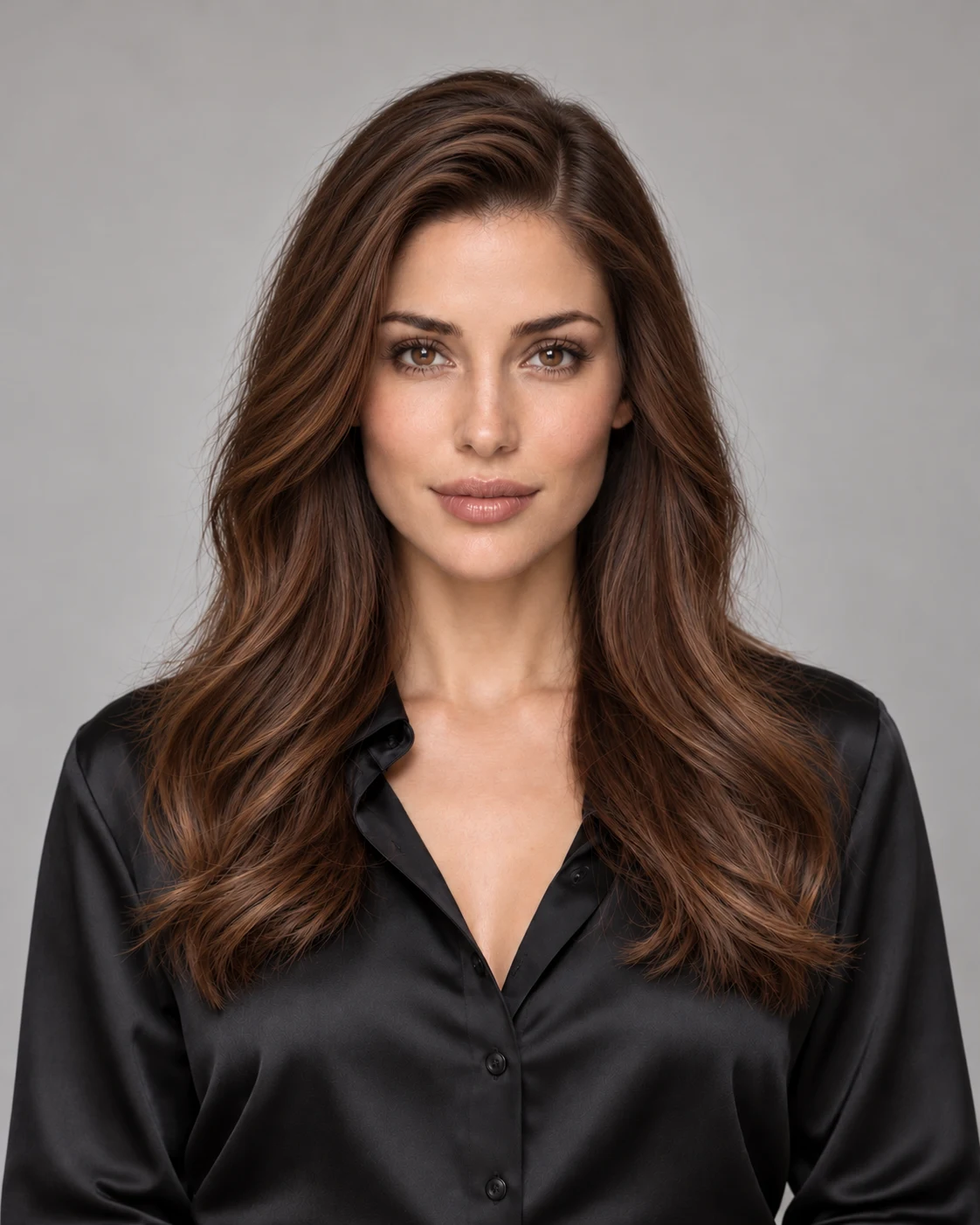
A side part moves the dividing line away from the center, creating a fuller section on one side and a smaller section on the other.
Here, the upper hair sweeps gently across the crown with a little lift at the roots. The front pieces remain long, leaving the forehead open and both eyes visible. This is a side-parted hairstyle rather than a cut with side-swept bangs.
The chestnut color and softly waved lengths keep the finish cohesive with the middle-part look, while the uneven distribution creates a noticeable change around the face.
Try this look if: You like an asymmetric shape or want to experiment with a fuller-looking sweep at the front.
Styling tip: Start with a moderate side part and adjust its position gradually. Guide the roots into place while drying, allowing some lift on the fuller side.
Middle Part vs Side Part: The Main Differences
| Feature | Middle Part | Side Part |
|---|---|---|
| Parting position | Near the center | Away from the center |
| Hair distribution | More even on both sides | Fuller on one side |
| Shape around the face | Balanced framing | Asymmetric framing |
| Root styling in these looks | Soft and relatively flat | Gently lifted on the fuller side |
| Front sections | Long, opening to both sides | Long, flowing in one main direction |
How to Choose Your Part
Start by trying both positions with your existing haircut. Compare them from the front and at a slight angle, keeping your styling similar so you can see the difference.
Your natural growth pattern matters. A cowlick may make one position easier to maintain, while a new part may need damp styling to settle into place. If a deep side part feels too dramatic, try a slightly off-center position first.
There is no single part that everyone needs to wear. Choose the shape you enjoy and the finish that works with your everyday routine.
Same Hair, a Different Finish
The middle part gives this hairstyle an even, softly framed appearance. The side part adds a gentle sweep and more fullness on one side.
Which would you choose: 1 or 2? Save your favorite as a styling reference.